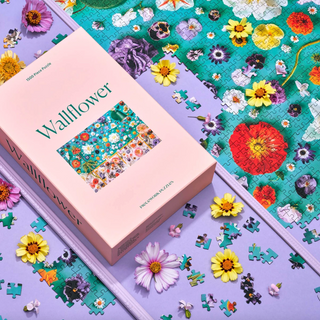
So you want to become a puzzler. Maybe you walked past a 1,000-piece landscape at the bookstore and felt an inexplicable pull. Maybe your aunt finished a gorgeous puzzle over Thanksgiving and you thought, I could do that. Maybe you just need a new hobby that doesn't involve a screen, a subscription, or leaving your couch.
Whatever brought you here — welcome. You're about to discover one of the most satisfying, screen-free, surprisingly addictive hobbies on the planet.
This guide covers everything a first-timer needs to know: how to pick a puzzle that won't make you cry, how to set up a workspace that actually works, how to go from "chaos pile of cardboard" to "finished masterpiece," and what to do once you're hooked (because you will be).
Let's get into it.
What Are Jigsaw Puzzles? A (Very Brief) History
At their core, jigsaw puzzles are beautifully simple: a picture, cut into interlocking pieces, waiting for you to put it back together. That's it. No batteries, no Wi-Fi password, no updates to install.
But they weren't always a leisure activity. The very first jigsaw puzzle was created in the 1760s by a British cartographer named John Spilsbury. He glued a map onto a sheet of wood, cut along the country borders with a saw, and handed the pieces to students as a geography lesson. Hence the name "jigsaw" — they were literally cut with a jig saw.
For over a century, puzzles stayed expensive and educational. It wasn't until the early 1900s, when manufacturers started die-cutting puzzles from cardboard instead of hand-sawing wood, that puzzles became affordable enough for regular people. During the Great Depression, jigsaw puzzles exploded in popularity — they were cheap entertainment you could share with the whole family. Sound familiar?
Fast forward to today, and the puzzle world has gone wild in the best way. You can get traditional flat puzzles, 3D puzzles that build into architectural models, gradient puzzles with no image at all (for the brave), double-sided puzzles (for the slightly unhinged), and even puzzles with irregularly shaped pieces.
The humble jigsaw puzzle has been entertaining humans for over 260 years, and honestly? It's never been better than right now.
Why Try Jigsaw Puzzles? (Besides the Fact That They're Ridiculously Fun)
Let's get the obvious out of the way: jigsaw puzzles are fun. Like, "looked up and it's 2 AM" fun. But there's actually a lot more going on beneath the surface.
Your Brain Will Thank You
Puzzles are a full-brain workout disguised as a good time. When you're scanning for the right piece, you're using visual-spatial reasoning. When you remember where you saw that one blue edge piece twenty minutes ago, that's your short-term memory flexing. When you figure out that this section connects to that section, you're problem-solving in real time.
Research has shown that engaging in jigsaw puzzles can improve cognitive function, sharpen attention to detail, and may even help delay symptoms of cognitive decline as we age. Not bad for something you do in your pajamas.
It's Basically Meditation (But With a Picture at the End)
There's a reason puzzlers describe the experience as "zen." When you're focused on fitting pieces together, your brain enters a state that psychologists call "flow" — that sweet spot where you're challenged enough to stay engaged but not so overwhelmed that you're stressed. The outside world fades. Your to-do list disappears. It's just you and the pieces.
In an era of constant pings, notifications, and doomscrolling, that kind of focused calm is genuinely rare. And you don't need an app or a membership to access it.
It Brings People Together
Puzzles might look like a solo hobby, but they're secretly one of the best group activities out there. Drop a half-finished puzzle on a coffee table and watch what happens — people drift over, pick up a piece, and before long you're puzzling together and actually talking. No competition, no winners or losers, just a shared goal and easy conversation.
Families, couples, roommates, coworkers on a retreat — puzzles have a way of creating connection without forcing it.
The Satisfaction Hit Is Real
There is a particular joy in clicking that last piece into place. Scientists would call it a dopamine release. Puzzlers call it chef's kiss. Either way, the sense of accomplishment you get from completing a puzzle — especially a challenging one — is tangible and earned. You made this. Piece by piece.
Types of Jigsaw Puzzles: A Quick Tour
Before you buy your first puzzle, it helps to know what's out there. The puzzle world is bigger (and weirder, and more wonderful) than most people realize.
By Piece Count
Piece count is the most common way to gauge a puzzle's difficulty. Here's the general landscape:
- 100–300 pieces: Quick and satisfying. Great for kids, casual puzzlers, or anyone who wants a one-evening project.
- 500 pieces: The sweet spot for beginners. Challenging enough to feel rewarding, manageable enough to not feel endless.
- 1,000 pieces: The classic. This is where most adult puzzlers live. Expect a few sessions to a full weekend.
- 1,500–2,000 pieces: Serious territory. You'll need space, patience, and probably a dedicated table.
- 3,000+ pieces: You're not puzzling anymore. You're making a lifestyle choice. (And we respect it.)
By Format
- Traditional flat puzzles: The standard. Pieces interlock on a flat surface to form a 2D image.
- 3D puzzles: Pieces curve and connect to build three-dimensional structures — think the Eiffel Tower or a globe.
- Shaped puzzles: Instead of a rectangle, the finished puzzle forms a shape (a butterfly, a lighthouse, a cat). These skip the straight-edge border entirely.
- Double-sided puzzles: An image on both sides of each piece. Yes, it's as chaotic as it sounds. No, we don't recommend this for beginners.
By Cut Style
This one's underrated. The way pieces are cut changes the entire experience:
- Ribbon cut: Pieces are cut in a grid pattern with uniform shapes. Predictable and satisfying.
- Random cut: Irregular piece shapes that don't follow a grid. More challenging, more interesting.
- Specialty cuts: Some brands include whimsy pieces — individual pieces shaped like animals, letters, or objects hidden within the puzzle.
By Theme
Landscapes, animals, famous artwork, vintage posters, food photography, abstract gradients, maps, pop culture, holiday scenes — if you can imagine it, there's probably a puzzle of it. Pick something you'd genuinely enjoy staring at for hours, because you will be.
Choosing Your First Puzzle: What Actually Matters
Alright, you're at the store (or online) staring at a wall of options. Here's how to pick a winner on your first try.
Aim for 300–500 Pieces
Resist the urge to grab a 1,000-piece stunner on day one. A 300 to 500-piece puzzle gives you the full experience — sorting, building, that finish-line high — without the risk of abandoning it halfway through. You can always level up on your second puzzle. And you will want a second puzzle.
Choose an Image With Variety
The image matters more than people think. A puzzle of a clear blue sky? Nightmare fuel for a beginner. What you want is an image with lots of distinct areas: different colors, clear sections, recognizable objects. Busy street scenes, colorful food markets, illustrated maps, mosaic patterns — these all give you visual "anchors" to work from.
A good rule of thumb: if you can point to at least four or five distinct areas in the image, it's a beginner-friendly choice.
Check the Piece Quality
Not all puzzles are created equal. High-quality puzzles have thick, sturdy pieces that click together with a satisfying snap and don't peel, fray, or generate a bunch of cardboard dust. Brands like New York Puzzle Company, Trevell, Cavallini and Cloudberries have earned strong reputations for piece quality. If you're buying from a brand you've never heard of, check reviews first. Check out our guide of premium jigsaw puzzles here.
Consider Piece Size
Standard puzzle pieces are fairly small. "Large piece" puzzles use bigger pieces (usually noted on the box), which can be easier to handle and see clearly. If you have any vision concerns or just prefer a less fiddly experience, large-piece puzzles are a great option — and they come in adult-level images, not just kids' designs.
Bonus Features
Some puzzles come with a reference poster (so you're not constantly flipping the box around), a resealable bag for storage, or even a puzzle with a missing piece guarantee. These little extras can make a real difference for your first experience.
Setting Up Your Puzzle Workspace
You've got a puzzle. Now you need somewhere to actually do it. This part is more important than it sounds — a bad setup can turn a relaxing hobby into a frustrating one fast.
Find a Flat, Stable Surface
Your workspace needs to be flat, stable, and large enough for the finished puzzle plus some elbow room for sorting. Check the box for finished dimensions — a 500-piece puzzle typically ends up around 18" × 24", so you'll want a surface that's at least a few inches bigger on each side.
A dining table, a large desk, or a folding table all work well. The key is that it won't be disturbed. If your dining table gets used for actual dining, read on.
Get a Puzzle Board or Mat
This is the single most useful accessory a puzzler can own. A puzzle board is a flat, portable surface you can build your puzzle on and then move when you need the table back. A puzzle mat lets you roll up your in-progress puzzle for storage.
If you plan to puzzle more than once (spoiler: you will), invest in one of these early. It removes the biggest logistical headache of the hobby.
Light It Up
Good lighting is non-negotiable. You need to see color differences, subtle pattern details, and piece shapes clearly. Natural daylight is ideal, but a bright, adjustable desk lamp works perfectly for evening sessions. Avoid dim overhead lighting or warm-toned bulbs that wash out colors.
Grab Some Sorting Trays
Small trays, bowls, muffin tins, even takeout containers — anything you can use to sort pieces into groups. Edge pieces in one tray, blue sky pieces in another, that cluster of red flowers in a third. It sounds fussy, but sorting trays cut your solving time dramatically and make the whole process more enjoyable.
Keep It Comfortable
You're going to be here for a while. Make sure your chair supports your back, your table is at a comfortable height, and you're not hunching. Puzzling should feel relaxing, not like a chiropractic emergency.
How to Solve Your First Jigsaw Puzzle: A Step-by-Step Walkthrough
Here it is — the main event. You've got your puzzle, your workspace is set up, and you're ready to go. Here's exactly how to get from sealed box to finished masterpiece.
Step 1: Unbox and Flip
Open the box, pour out all the pieces onto your workspace, and flip every single one face-up. Yes, every one. This step takes a few minutes and feels tedious, but it's the foundation of everything that follows. You can't find pieces you can't see.
While you're flipping, take a good look at the box image. Study it. Notice the major color areas, distinct objects, text, and any sections that look tricky. This is your roadmap.
Step 2: Sort Like Your Life Depends on It
Now separate your pieces into groups. Start with the most obvious sort:
Edge pieces go in their own pile. These have at least one straight side and will form your border. Pull them out first.
Then sort the remaining pieces by color, pattern, or recognizable section. You don't need to be precise — rough groupings are fine. All the green foliage pieces together, all the red pieces together, that cluster of pieces with text on them, the sky pieces, and so on.
This is where sorting trays earn their keep. Spread your groups out so you can scan them easily.
Step 3: Build the Border
Take your edge pieces and assemble the border first. It's like building the frame before you paint — it defines your workspace and gives you the boundaries to fill in.
Start from the corners (you've only got four, and they're easy to identify — two straight sides). Then connect the edges outward from each corner. Use the box image to figure out which edges go where.
Don't stress if your border has a few gaps. Sometimes edge pieces are sneaky and end up in your interior piles. You'll find them.
Step 4: Work Section by Section
With the border in place, shift your focus to the interior. But here's the key: don't try to fill it in randomly. Work in sections.
Pick the most distinctive area of the puzzle — the part with the most unique colors or clearest details — and start there. Maybe it's a bright red barn, a cluster of sunflowers, or the text on a sign. These sections come together quickly and give you momentum.
Once you complete one section, move to the next most distinctive area. As sections grow and connect, the puzzle starts filling in faster and faster. It snowballs.
For the trickier parts (large areas of similar color, like sky or water), try sorting those pieces by subtle shade differences and piece shape. It's slower, but methodical beats random every time.
Step 5: The Home Stretch
As you approach the finish, something magical happens: every remaining piece has fewer possible spots. What started as chaos is now a puzzle with clear gaps, and placing each piece becomes quicker and more satisfying.
When you click that very last piece into place — and you will — take a moment. Look at what you built. You turned a pile of 500 disconnected pieces into a complete picture. That's pretty great.
Take a photo. Text it to someone who'll appreciate it. Post it online. Or just sit back and enjoy the view.
Tips and Tricks That Actually Help
Here are the things experienced puzzlers wish someone had told them from the start:
Don't force pieces. If a piece doesn't slide in smoothly, it doesn't belong there — no matter how much it looks like it should. Forcing pieces warps them and creates false connections that mess up the surrounding area. If it doesn't click naturally, move on.
Rotate, rotate, rotate. A piece that looks wrong might just be oriented incorrectly. Give it a spin before you discard it. This is especially true for pieces with subtle color gradients.
Work in good lighting, always. You'd be amazed how many "impossible" sections become easy when you switch from a dim lamp to a bright one. Color differences that were invisible suddenly pop.
Take breaks. Seriously. Walk away for an hour, a day, whatever you need. When you come back with fresh eyes, you'll immediately spot connections you were blind to before. Every puzzler knows this phenomenon — it's practically a law of physics.
Use the box image constantly. There's no shame in referencing the picture. Flip the box around so it faces you while you work. Some puzzles include a separate poster, which is even better — prop it up right next to your workspace.
Try different approaches if you're stuck. If sorting by color isn't working for a particular section, try sorting by piece shape instead. Some puzzlers work from left to right, some work outward from a completed section, some hunt for specific pieces. There's no single "right" method.
Keep pets and small children in mind. A curious cat or a toddler can undo hours of work in seconds. Puzzle boards with covers, high tables, or dedicated puzzle rooms (if you're lucky) are your friends here.
Common Beginner Mistakes (and How to Dodge Them)
Every new puzzler makes a few of these. Here's your cheat sheet for skipping the frustration:
Going too big too fast. That 2,000-piece fantasy castle looks incredible on the shelf. It will look less incredible scattered across your table for three weeks while you question your life choices. Start with 300–500 pieces. Build your skills and stamina, then level up.
Skipping the sort. "I'll just start putting pieces together and see what happens." What happens is you'll spend three times as long hunting for pieces. The twenty minutes you invest in sorting saves you hours later.
Puzzling in bad lighting. Navy blue and black look identical under a dim overhead light. Deep green and dark teal? Forget it. Good lighting isn't a luxury — it's a requirement.
Forcing pieces that don't fit. If you have to push, bend, or convince a piece to go somewhere, it doesn't go there. A proper fit feels smooth and definitive. No gray area.
Ignoring your posture. Hunching over a puzzle for four hours straight is a recipe for a sore back and stiff neck. Sit properly, take stretch breaks, and make sure your table height works for you.
Not using a reference image. Some puzzlers feel like using the box image is "cheating." It's not. It's the entire point. The image is your guide — use it.
Ready for More? Advancing Beyond Beginner Puzzles
Once you've finished a few 500-piece puzzles and you're hungry for more, the whole world of puzzling opens up. Here's how to level up:
Increase your piece count gradually. Jump from 500 to 750 or 1,000. The difficulty increase is real — a 1,000-piece puzzle isn't just twice as hard as a 500, it's exponentially more complex. Give yourself grace as you adjust.
Try more challenging images. Gradients, monochromatic scenes, puzzles with lots of sky or water — these force you to rely on piece shape rather than color. It's a different skill, and developing it makes you a much stronger puzzler.
Experiment with different brands and cut styles. Every brand has a different feel. Galison's 2-in 2-out ribbon cut pieces are different from Cobble Hill's random cut, which is different from a wooden puzzle's thick, hand-cut pieces. Trying different brands is one of the joys of the hobby.
Explore specialty puzzles. 3D puzzles, shaped puzzles, mystery puzzles (where you don't see the image beforehand), Face De Puzzle puzzles (where the image on the box is a clue, not the answer) — there's an entire universe beyond the standard rectangle.
Join the community. Follow puzzle accounts on Instagram, join Reddit's r/jigsawpuzzles, watch puzzle YouTubers, find a local puzzle exchange group. The puzzle community is one of the friendliest corners of the internet, and you'll discover brands, techniques, and puzzles you'd never find on your own.
Consider speed puzzling. Yes, competitive puzzle-solving is a real thing, and it's growing fast. National and international tournaments hosted by USA Jigsaw Puzzle Association attract thousands of participants. Even if you never compete, timing yourself on puzzles is a fun way to track your improvement. You can also find speed puzzling competitions at local breweries. Find your local competition with Puzzle Buzz.
What to Do With a Finished Puzzle
You've placed the last piece. You've basked in the glow. Now what?
Display it. If you love the image, glue the puzzle with puzzle preserver (a clear adhesive), let it dry, and frame it. A finished puzzle makes surprisingly great wall art — and it's a conversation starter. You can also send your masterpiece off to Preserve My Puzzle — they will professionally preserve your finished puzzle, and return it ready to display.
Break it down and redo it. Many puzzlers love revisiting favorites. Disassemble it, bag it up, and save it for a rainy day. You'll be faster the second time, and it's still satisfying.
Pass it on. Puzzle swaps are a wonderful tradition. Trade with friends, donate to a local library or senior center, join a puzzle exchange group online, or leave it in a Little Free Library. One person's completed puzzle is another person's next adventure.
Store it properly. If you're keeping it, store the pieces in a sealed bag inside the original box. Keep boxes upright like books to save shelf space. Label any puzzles that are missing pieces (it happens) so the next person knows what they're getting into.
Welcome to the Club
Here's the thing about jigsaw puzzles that's hard to explain until you've experienced it: they're more than the sum of their pieces.
They're the quiet hour after the kids go to bed. They're the rainy Sunday that turned into the best afternoon you've had in months. They're the phone call with your mom where you both worked on the same section and just talked. They're the moment you realize you haven't thought about work, the news, or your phone in two hours — and how good that feels.
You don't need to be good at puzzles to enjoy them. You just need to start.
So grab a 500-piece puzzle that catches your eye, clear off a table, pour out the pieces, and begin. One edge at a time.
Welcome to the club. We've been expecting you.
Written by: Kate Goodnough (co-Founder of Puzzledly)